Best Delivery Management Software for Ghost Kitchens


Operators Daily is where multi-unit restaurant and hourly-workforce operators get smart, fast — practical guides and no-nonsense software comparisons across hiring, onboarding, scheduling, payroll, and compliance.
Popular articles
For a ghost kitchen, delivery is the business, not a side channel. Every order arrives through a marketplace app, a branded website, or a courier network, and every handoff between those systems is a chance for a missed ticket, a late driver, or a margin lost to fees. The software that connects ordering, the kitchen, and the last mile has a direct effect on whether a delivery-only operation stays profitable.
This guide explains the different types of software ghost kitchen operators use to manage delivery, reviews 10 platforms across those categories, and covers the pricing, integration, and multi-brand questions to settle before committing to a system.
Key Takeaways
- Third-party marketplace commissions can represent a substantial share of an individual order's value. DoorDash's standard U.S. restaurant delivery plans, for example, list commissions of 15%, 25%, and 30%, which is why many ghost kitchens add direct ordering alongside marketplaces.
- The platforms in this guide fall into three categories: POS and kitchen operations, order aggregation, and dispatch and last-mile logistics. A strong kitchen platform may not offer advanced fleet optimization, and a logistics platform may not include restaurant ordering or POS tools.
- Multi-brand capabilities vary by platform. Operators running several virtual brands should verify brand-level menus, reporting, payment settlement, and kitchen routing for each system they consider.
- Pricing ranges from free tiers (Shipday, Delivety) to custom enterprise quotes (Locus, FarEye), so operators should match their selection to current order volume and growth plans.
- According to a May 2026 National Restaurant Association survey of restaurants offering third-party delivery, 47% of full-service operators and 43% of limited-service operators do not make a profit on third-party delivery orders.
Understanding Delivery Management Software for Ghost Kitchens
Ghost kitchens operate without a traditional storefront, which means delivery is not just one revenue channel but the entire business model. With the growing demand for food delivery, the opportunity is significant. However, the operational complexity of managing orders from multiple delivery apps, coordinating drivers, and maintaining food quality across virtual brands requires specialized software.
Delivery management software for ghost kitchens can cover order aggregation, dispatch automation, route optimization, and driver tracking, though most platforms specialize in some of these functions rather than all of them. Unlike traditional restaurant technology, these platforms must support the unique demands of delivery-only operations, including running multiple virtual brands from a single location. For operators building efficient teams, understanding how technology integrates with restaurant workforce management is equally important.
The core functions include:
- Order aggregation: Consolidating orders from DoorDash, Uber Eats, Grubhub, and direct channels into one dashboard
- Dispatch management: Assigning orders to in-house drivers or third-party couriers automatically
- Real-time tracking: Providing visibility into order status for kitchen staff and customers
- Route optimization: Reducing delivery times and fuel costs through intelligent routing
The platforms in this guide fall into three categories, and each covers a different part of the order-to-delivery workflow:
Key Features of Top Delivery Management Software for Ghost Kitchens
When evaluating platforms, ghost kitchen operators should prioritize features that address the high-volume, delivery-only model.
Order Aggregation and Menu Sync
Aggregation platforms aim to eliminate "tablet chaos" by pulling orders from connected delivery apps into a single screen. Menu synchronization can push price changes and item availability to connected channels, but how quickly and completely updates sync depends on the specific POS, marketplace, and integration configuration, so operators should verify it before relying on it to prevent overselling.
Multi-Brand Support
Multi-brand capabilities vary by platform. Operators should verify brand-level menus, reporting, payment settlement, channel integrations, and kitchen routing rather than assuming that all platforms support the same workflows.
Commission-Free Direct Ordering
Marketplace commissions vary by plan and agreement; DoorDash's standard U.S. restaurant delivery plans, for example, list commissions of 15%, 25%, and 30%. Direct ordering platforms let customers order through a restaurant's own website or app, which eliminates third-party marketplace commissions on those transactions. Merchants may still pay delivery fees through services like DoorDash Drive or Uber Direct, as well as payment-processing, software, and other service fees.
Kitchen Display System Integration
Orders must flow directly to the kitchen display system (KDS) with proper routing, ticket timers, and prep instructions. Integration prevents manual re-entry and the errors that come with it.
10 Best Delivery Management Software Platforms for Ghost Kitchens
The platforms below span all three software categories. Each review covers publicly documented features, published pricing, and the plan limits or integrations operators should confirm with the vendor. The "best for" labels are editorial guidance rather than the result of a standardized product trial.
1. Tabski - Best for Multi-Brand Ghost Kitchen Operations
Best for: Ghost kitchens running 2+ virtual brands from shared kitchen space
Tabski is a POS and kitchen operations platform with a dedicated ghost-kitchen offering. Its featured ghost-kitchen workflow centers on branded direct orders and on-demand courier fulfillment rather than listings on DoorDash or Uber Eats marketplaces, and it handles automated payouts and split funding for each virtual brand.
Key Features:
- Native multi-brand support with isolated menus and per-brand reporting
- Branded direct ordering with on-demand courier dispatch through DoorDash Drive and Uber Direct
- Unified KDS routing all brands to one kitchen display
- Order throttling by brand to prevent kitchen overload
Price: Ghost-kitchen pricing varies by configuration and volume. Tabski's published standard rates include POS (69/monthperdevice),KDS(25/month per device), and mobile QR and online ordering ($59/month per location) components; contact sales for a multi-brand quote. These component rates are not a complete ghost-kitchen subscription.
Strengths:
- Brand-isolated menus, brand-level reporting, and unified KDS in one system
- Automated brand payouts and split funding
- Integrated on-demand courier dispatch for direct orders
Limitations:
- Ghost-kitchen pricing requires a quote
- The featured ghost-kitchen product focuses on direct ordering; confirm the specific marketplace integration configuration before relying on it to aggregate third-party marketplace orders
- Not a dedicated fleet-optimization platform
2. Locus - Best for Enterprise Multi-Location Chains
Best for: Restaurant chains and enterprises with high daily delivery volumes across multiple locations
Locus is a dispatch and last-mile logistics platform with AI routing, dispatch orchestration, and enterprise positioning. According to Locus, its technology has optimized more than 1.5 billion deliveries and contributed to over $320 million in logistics cost savings. The company says its predictive analytics help forecast demand and optimize delivery performance across multiple locations.
Key Features:
- AI-driven dispatch automation with proximity and priority-based assignment
- Control Tower module for real-time visibility across all orders and vehicles
- Dynamic route optimization analyzing traffic and delivery windows
- Hybrid fleet management coordinating owned, outsourced, and gig drivers
Price: Custom enterprise pricing.
Strengths:
- AI routing and dispatch orchestration
- Hybrid fleet coordination across owned, outsourced, and gig drivers
- Built for multi-location delivery networks
Limitations:
- Pricing isn't published; requires a sales quote
- Focuses on logistics rather than restaurant ordering, menus, or POS
- Performance figures are company-reported rather than independently verified
3. Deliverect - Best for Order Aggregation Across Multiple Channels
Best for: Multi-outlet operators receiving orders from multiple delivery apps
Deliverect is an order aggregation and restaurant delivery orchestration platform. It offers separate solutions: Restaurants (marketplace order aggregation and POS integration), Direct (branded first-party ordering), and Dispatch (delivery provider coordination and delivery management).
Key Features:
- Centralized order dashboard consolidating connected delivery apps and POS data
- 1,000+ integrations with platforms including Uber Eats, DoorDash, Square, and Toast
- Menu management and synchronization across connected channels
- Dispatch module for last-mile fleet aggregation
Price: Custom pricing (contact for quote). Deliverect offers modular pricing with separate tiers for Restaurants, Dispatch, and Direct ordering, so operators should not assume every listed capability is included in one subscription.
Strengths:
- Large integration directory spanning marketplaces and POS systems
- Modular solutions let operators choose aggregation, direct ordering, or dispatch
- Connects existing POS systems rather than replacing them
Limitations:
- Pricing isn't published; requires a sales quote
- Capabilities are split across separate products, which can raise total cost
- Not a POS or kitchen display system on its own
4. Square for Restaurants + Square KDS - Best for Small Ghost Kitchens Using Square
Best for: Small ghost kitchens already using the Square ecosystem
Square for Restaurants is a POS and kitchen operations platform, and Square KDS primarily manages kitchen tickets and routing rather than functioning as a standalone courier dispatch and route-optimization system. Square's ghost-kitchen page describes online ordering with multiple virtual restaurant pages and third-party delivery app integrations. "With Square KDS, the customer wins because the food is coming out quicker with fewer errors," reports Burgerism in Manchester, UK, on Square's ghost-kitchen page.
Key Features:
- Order management from Square Online and supported third-party delivery integrations
- Free online ordering website with multiple pages for different concepts
- Smart routing and ticket timers for kitchen efficiency
- No setup fees or long-term contracts
Price: £15/month per KDS device in the UK (30-day free trial available). The Square for Restaurants Plus plan is £69/month per location and includes unlimited KDS devices; payment processing and hardware are charged separately.
Strengths:
- Low entry price for operators already on Square
- Plus plan includes unlimited KDS devices per location
- Multiple online ordering pages for different concepts
Limitations:
- Third-party delivery aggregation depends on supported integrations
- Courier logistics may require additional services
- Brand separation, merchant-account configuration, and per-brand accounting should be evaluated independently
5. VROMO - Best for Hybrid Fleet Coordination
Best for: Restaurants managing both in-house drivers and third-party overflow
VROMO is a dispatch and last-mile logistics platform designed for hybrid delivery operations where in-house drivers handle most orders while third-party couriers absorb demand spikes. VROMO publishes its pricing, though total costs also depend on third-party courier charges, integrations, and any additional contractual costs.
Key Features:
- Order overflow to partner fleets such as DoorDash, with courier pricing and availability set by each merchant agreement
- Auto-dispatch assigns best delivery provider using custom business rules
- Order stacking groups multiple deliveries per trip
- Two-way driver chat for real-time communication
Price: $99/location per month + $0.25 per order after 400 orders.
Strengths:
- Published per-location pricing
- Coordinates in-house drivers and third-party couriers in one system
- Order stacking and driver communication tools
Limitations:
- Per-order charges apply above 400 orders
- Third-party courier costs are billed separately from the software
- Not a restaurant POS or ordering platform
6. Delivety - Best Affordable All-in-One Cloud Kitchen Platform
Best for: Budget-conscious cloud kitchens needing POS, KDS, and ordering in one system
Delivety is a POS and kitchen operations platform that advertises free usage for up to 300 monthly orders, a $49/month tier supporting up to 5,000 orders, and no platform commission on orders. The free tier provides a starting point for new ghost kitchen operators before scaling to paid plans.
Key Features:
- Integrated POS, KDS, Menu Builder, and Recipe Editor
- Multi-domain support for multiple brands with separate locations
- Food ordering website builder included
- Unlimited users, locations, and brands
Price: Free up to 300 orders per month; $49/month for up to 5,000 orders.
Strengths:
- Free tier for low-volume operations
- No platform commission on orders
- POS, KDS, recipe management, and ordering in one system
Limitations:
- "Unlimited brands" is a vendor-published capability; confirm separate merchant settlement and brand-specific accounting functions before relying on them
- Exact courier integrations must be confirmed
- Delivety's comparison of competitor per-order fees comes from its own marketing materials
7. Shipday - Best Free Tier for Local Restaurants
Best for: Local eateries and pizzerias doing direct delivery with in-house drivers
Shipday is a dispatch and last-mile logistics platform for restaurants running their own drivers. Its free Starter plan makes it accessible for small operations just starting direct delivery, while higher tiers support larger volumes and add AI-related tools. Features in the basic delivery management plans differ from those in the higher-tier AI plans.
Key Features:
- Route optimization to help businesses plan more efficient delivery routes
- Real-time tracking for managers and customers
- Proof of delivery with photos, signatures, and timestamps
- AI-related tools, including insights on sales and driver efficiency, on higher-tier plans
Price: Free Starter plan; Professional starts at $39/month with 300 included orders. Overage rates and higher-tier plan prices vary across Shipday's published pages, so check the current pricing page before budgeting.
Strengths:
- Free plan for small delivery operations
- Low-cost entry to paid plans
- Proof of delivery and real-time tracking
Limitations:
- Per-order overage charges apply beyond included orders
- AI capabilities are tied to higher-tier plans
- Not a restaurant POS or marketplace aggregation platform
8. Otter - Best Hybrid Ordering for Independent QSR
Best for: Independent QSR/fast-casual operators wanting marketplace reach plus direct ordering
Otter is a POS and kitchen operations platform that combines marketplace order aggregation with direct online ordering. Menu changes made in Otter update the POS register, which closes the gap between pricing decisions and POS updates.
Key Features:
- Combines commission-free direct ordering with marketplace aggregation
- Single-dashboard menu management across all delivery channels
- Menu changes update the POS register automatically
- Inventory Savings program, which Otter says returns up to 9% cash back on ingredients (a procurement benefit, not a delivery management feature)
Price: Advanced starts at $178/month per location and includes order aggregation and online ordering. Starter is $79/month and Professional is $278/month per location. Prices are in USD, and Otter lists processing charges, a minimum processing fee for locations below its stated processing threshold, and hardware-lease contract conditions.
Strengths:
- Published POS bundle pricing
- Marketplace aggregation and direct ordering in one plan
- Menu changes sync to the POS register
Limitations:
- Order aggregation and online ordering require the Advanced tier or higher
- Processing minimums and hardware-lease terms affect total cost
- Not a dedicated fleet-dispatch platform
9. Onfleet - Best for High-Volume Last-Mile Operations
Best for: Restaurant chains with high daily delivery volumes needing robust route optimization
Onfleet is a dispatch and last-mile logistics platform. Its documentation distinguishes basic routing from advanced optimization, and higher-level plans add dispatch automation, customization, and enterprise controls, including multi-brand and multi-region functionality on Enterprise.
Key Features:
- Route optimization, with basic routing on Launch and advanced optimization on higher plans
- Real-time tracking with ETAs
- Automated SMS updates and post-delivery feedback collection (SMS and voice usage may incur separate charges)
- Proof of delivery with photos or signatures
Price: Starting at $619/month for Launch; enterprise pricing available by quote. Launch includes 2,500 completed delivery or pickup tasks monthly, and Scale ($1,349/month) includes 5,000.
Strengths:
- Published task-based pricing for Launch and Scale
- Proof of delivery and customer notifications
- Enterprise plan supports multi-brand and multi-region operations
Limitations:
- Advanced optimization and dispatch automation require Scale or Enterprise
- SMS and voice usage may add charges
- Higher entry price than other dispatch tools in this guide
10. FarEye - Best for Enterprise Predictive Logistics
Best for: Large enterprises running complex, multi-region delivery operations
FarEye is an enterprise last-mile logistics platform that may be appropriate for complex, multi-region delivery operations. Its documentation supports predictive visibility, delivery tracking, automated customer notifications, scheduling, and returns management, though much of this functionality relates to broader enterprise logistics rather than typical meal delivery workflows.
Key Features:
- Predictive routing using AI to forecast delivery times
- Real-time tracking reducing delays across regions
- Dynamic rescheduling for order or address changes
- Returns management automation
Price: Custom subscription-based pricing.
Strengths:
- Predictive visibility and delivery tracking
- Automated customer notifications and scheduling
- Built for multi-region logistics networks
Limitations:
- Pricing isn't published; requires a sales quote
- Returns management and other enterprise logistics features are less central to ordinary ghost kitchens
- Restaurant-specific suitability should be confirmed with the vendor
Integrating Online Ordering Systems with Delivery Management
The relationship between online ordering and delivery management is symbiotic. An online ordering system captures customer orders, while delivery management software fulfills them. For ghost kitchens, this integration determines whether the operation runs smoothly or drowns in manual workarounds.
Direct ordering through a white-label system eliminates marketplace commissions on those orders, but operators must either build their own delivery fleet or connect to on-demand courier networks. Some platforms combine direct ordering with courier dispatch, while others require separate integrations or delivery providers. Operators should verify the complete order-to-delivery workflow before selecting a system.
Key integration considerations:
- Menu sync frequency: Confirm how quickly menu and availability changes reach each channel, since timing depends on the specific integration
- Payment processing: Ensure the ordering system handles refunds and chargebacks seamlessly
- Customer data ownership: Direct ordering may give restaurants greater control over customer data and marketing relationships, subject to the provider's terms, privacy settings, and applicable data protection requirements
Optimizing Delivery Operations for Multiple Ghost Kitchen Brands
Managing multiple virtual brands from one kitchen requires software that treats each concept as a distinct business while sharing operational resources. Multi-brand capabilities vary by platform, so operators should check how each system handles brand-level menus, reporting, settlement, and kitchen routing.
Native multi-brand platforms like Tabski provide:
- Separate ordering pages and branding for each virtual restaurant
- Isolated menu management preventing cross-brand errors
- Per-brand analytics and financial reporting
- Unified kitchen display consolidating all orders by prep station
Operators using single-brand systems often create workarounds, such as running multiple tablets or manually categorizing orders. These approaches can introduce errors and slow down kitchen operations during rush periods.
For teams managing hourly workers across multiple brands, pairing delivery management software with strong scheduling software creates operational consistency.
Selecting the Best Delivery Management Software: A Buyer's Guide
Step 1: Assess Your Current State
Document your current order volume, number of delivery channels, fleet composition (in-house vs. third-party), and POS system. This baseline determines which platforms fit your operational complexity.
Step 2: Define Your Must-Have Features
For ghost kitchens, prioritize:
- Multi-brand support if running multiple concepts
- Commission-free direct ordering if marketplace fees are eroding margins
- POS integration matching your existing system
- Scalability for planned expansion
Step 3: Calculate Total Cost of Ownership
Look beyond base subscription fees. Consider per-order charges, integration costs, and courier fees. A platform priced at $49/month but charging 1.5% per order may cost more than a $199/month flat-rate alternative at higher volumes.
Step 4: Request Demos and Trial Periods
Many platforms offer demonstrations or trial periods. Test with your actual menu and order flow to evaluate fit before committing.
Leveraging POS Systems for Efficient Ghost Kitchen Delivery
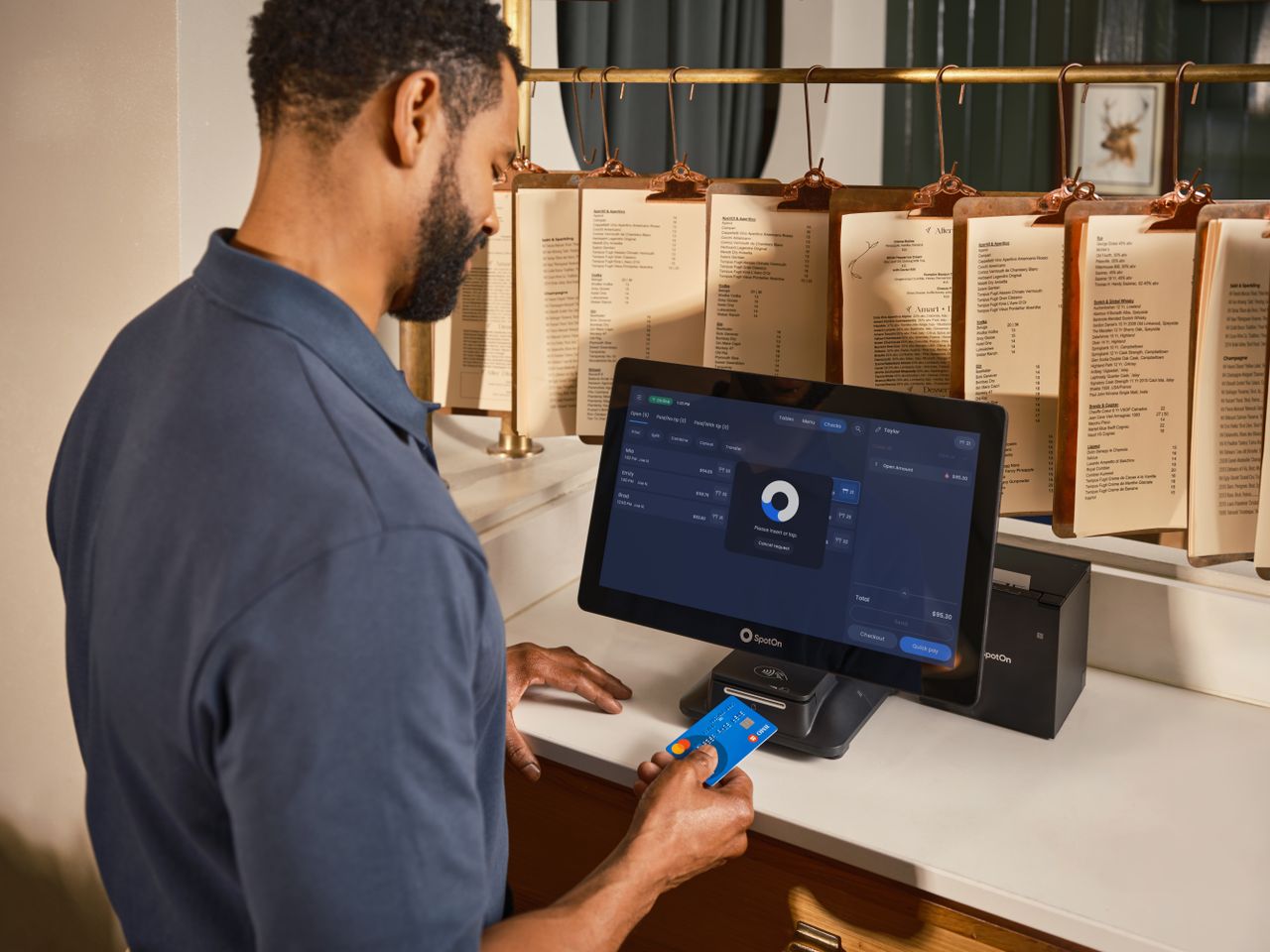
The POS system sits at the center of ghost kitchen operations, routing orders to the KDS, managing inventory, and generating reports. For delivery management, seamless POS integration eliminates double-entry and ensures accurate order data.
Key POS integration points:
- Order routing: Orders from all channels should flow directly into the KDS without manual intervention
- Inventory sync: Sold items should decrement inventory to help prevent overselling
- Sales reporting: Delivery orders should appear alongside any pickup or catering sales for complete visibility
- Menu updates: Changes made in the POS should push to all connected ordering channels
Actual synchronization depends on the particular POS, marketplace, integration, and inventory configuration, so treat these as capabilities to verify rather than features every connected system provides automatically. Operators comparing POS options should evaluate both native delivery features and third-party integration capabilities. When new employees join, efficient onboarding software helps them learn these systems faster.
Food Delivery Apps and Their Impact on Ghost Kitchen Operations
Third-party delivery apps remain essential for customer acquisition, even as ghost kitchens build direct ordering channels. DoorDash leads the U.S. third-party food delivery market, followed by Uber Eats. Published market-share estimates vary by source, period, and measurement methodology.
The trade-off is straightforward: marketplaces provide visibility and customers but charge commissions that can represent a substantial share of an individual order's value. A May 2026 National Restaurant Association survey of 830 restaurants offering third-party delivery found that 47% of full-service operators and 43% of limited-service operators do not make a profit on third-party delivery orders. About two-thirds of responding restaurants reported paying average third-party delivery fees between 15% and 29.9%.
Effective strategies include:
- Using marketplaces for customer acquisition and brand awareness
- Promoting direct ordering through the restaurant's permitted marketing channels, using customer information and incentives in accordance with applicable marketplace agreements and privacy requirements
- Maintaining higher prices on marketplaces to offset commissions
- Tracking customer lifetime value across channels to allocate marketing spend
Future-Proofing Your Ghost Kitchen: Scalability and Compliance
As ghost kitchens grow, delivery management software must scale alongside. Adding new brands, locations, or delivery zones should not require replacing your entire tech stack.
Scalability Factors:
- Maximum order volume supported per plan
- Additional location pricing
- API access for custom integrations
- Multi-region or multi-currency support for expansion
Compliance Considerations:
Ghost kitchens must comply with applicable food safety, employment, tax, and business requirements. Specific obligations vary by location and operating model. Software may support recordkeeping and monitoring but does not replace a compliance review. Depending on the operation, delivery management software can help with:
- Driver hour tracking to support labor recordkeeping
- Delivery temperature monitoring, where an operation's requirements call for it
- Tax calculation across delivery zones
- Order records retention for audits
For labor compliance specifically, integrating delivery management with restaurant workforce management systems can help keep scheduling, time tracking, and payroll aligned with delivery operations, though it does not by itself guarantee legal compliance.
The Bottom Line
The right system depends on which part of the delivery workflow needs the most support. Operators running several virtual brands from one kitchen will look first at POS and kitchen platforms such as Tabski, Delivety, Otter, or Square. Those juggling many marketplace tablets will weigh an aggregator like Deliverect, and kitchens with their own drivers or high delivery volumes will compare dispatch tools such as Shipday, VROMO, Onfleet, Locus, or FarEye. Many ghost kitchens end up combining tools from more than one category.
Before signing, map the full path an order takes from the customer to the doorstep and confirm which system handles each step. Ask every vendor for total configured pricing, including per-order charges, courier fees, processing, and hardware, and test the platform with your real menus and brands during a demo or trial. Once delivery is running smoothly, the same discipline applies to the online ordering channel that feeds it.
Frequently Asked Questions
What is the primary benefit of delivery management software for a ghost kitchen?
The primary benefit is consolidating orders from multiple delivery channels into one system while providing tools to reduce reliance on marketplace commissions. Third-party marketplace commissions can represent a substantial share of an individual order's value; DoorDash's standard U.S. restaurant delivery plans, for example, list commissions of 15%, 25%, and 30%. Direct ordering eliminates third-party marketplace commissions on those transactions, but merchants may still pay delivery, payment-processing, software, and other service fees.
How does delivery management software integrate with existing POS systems?
Integration typically works through APIs that connect the delivery platform to the POS. When an order arrives from a connected channel, the software pushes it to the kitchen display system and records the sale in the POS. Platforms like Deliverect offer 1,000+ integrations covering major POS systems. Confirm that your specific POS and marketplaces are supported before committing.
Can delivery management software help manage multiple virtual brands operating from one ghost kitchen?
Yes, but multi-brand capabilities vary by platform. Tabski provides isolated menus, brand-level reporting, and automated per-brand payouts and split funding. Delivety advertises unlimited brands, while Onfleet lists multi-brand and multi-region functionality in its Enterprise offering, though these capabilities are not necessarily equivalent. Operators should verify brand-level menus, reporting, payment settlement, channel integrations, and kitchen routing for any platform they consider.
What are the essential features to look for when choosing delivery management software?
Essential features include order aggregation (consolidating all delivery channels), POS integration (eliminating manual entry), KDS routing (directing orders to kitchen displays), and ideally commission-free direct ordering. For multi-brand operations, native brand isolation is critical. Because platforms specialize in POS and kitchen operations, order aggregation, or dispatch and logistics, many operators need more than one tool to cover the full workflow.
How do third-party food delivery apps factor into a ghost kitchen's delivery strategy?
Third-party apps provide customer acquisition and marketplace visibility but at significant cost. Ghost kitchens typically use a hybrid strategy: leverage marketplaces for discovery while promoting direct ordering through the restaurant's permitted marketing channels. Any use of customer information and incentives should follow applicable marketplace agreements and privacy requirements.
Join multi-unit operators getting practical guides and no-nonsense software breakdowns across hiring, onboarding, scheduling, payroll, compliance, and what's shifting in the industry.
Free. One email a week. Unsubscribe anytime.