Best Online Ordering Systems for QSRs


Operators Daily is where multi-unit restaurant and hourly-workforce operators get smart, fast — practical guides and no-nonsense software comparisons across hiring, onboarding, scheduling, payroll, and compliance.
Popular articles
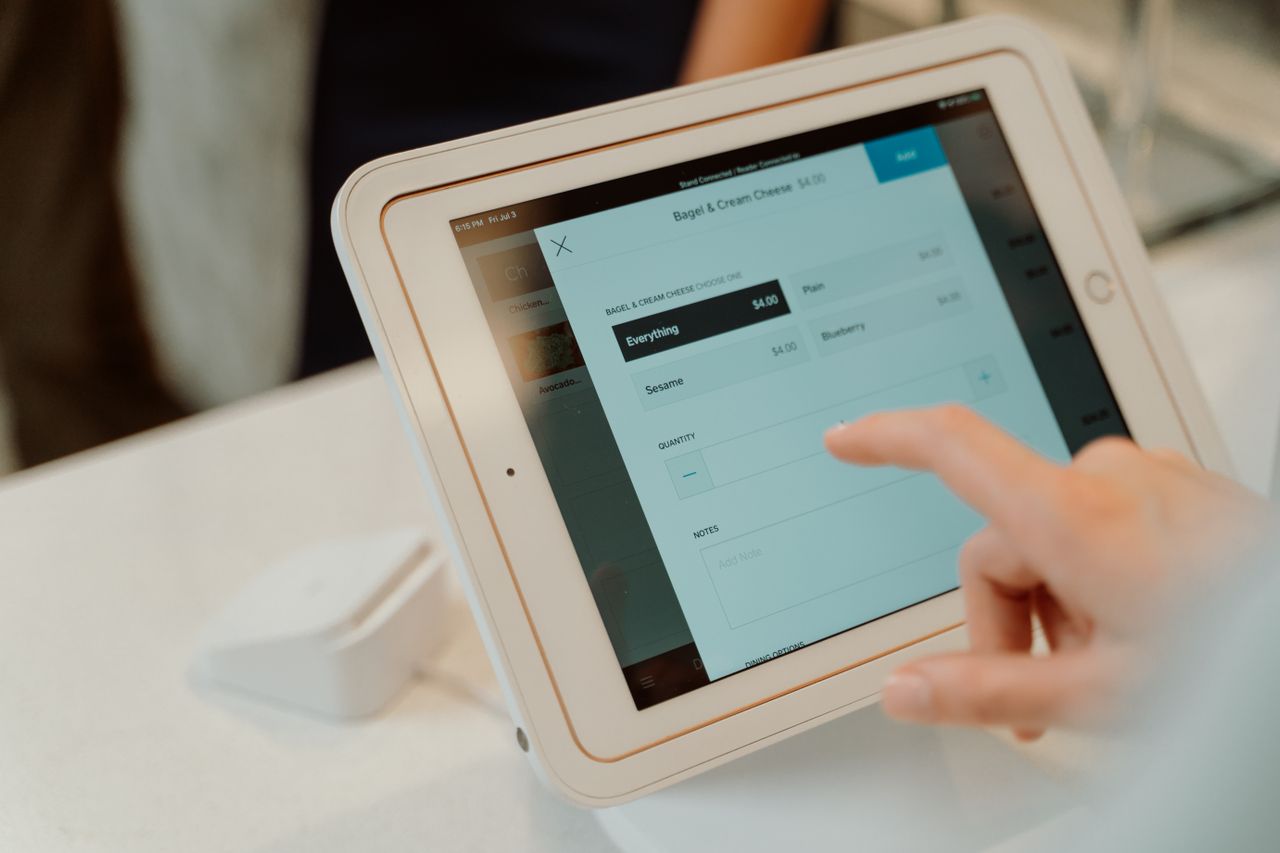
QSR operators face a familiar dilemma: third-party marketplaces deliver customer reach but carve out significant commissions on every order. Taking control of your digital ordering channels is now more practical than ever. Whether you're managing a single location or coordinating operations across dozens of franchise units, selecting the right online ordering system affects everything from labor efficiency to profit margins.
This guide evaluates 12 online ordering systems based on QSR-specific capabilities: multi-location management, POS integration depth, kitchen display system compatibility, commission models, and scalability for franchise operations.
Key Takeaways
- Direct online ordering can help QSRs avoid third-party marketplace commissions on eligible orders, although payment processing, software subscriptions, delivery, and marketing costs still apply.
- Consumer surveys indicate interest in ordering directly from restaurants, although preferences vary by channel, price, and convenience.
- POS and kitchen display system (KDS) integration is critical for QSR speed of service and order accuracy.
- Enterprise-oriented platforms like Olo and Lunchbox target multi-unit chains, while Square and ChowNow offer accessible entry points for smaller operations.
- Some industry research cited by Paytronix suggests that self-service kiosks can increase average order values, with reported increases ranging from 15% to 30%. Actual results vary.
Understanding the Online Ordering System Landscape for QSRs
Digital ordering has shifted from a convenience feature to a core revenue channel for quick service restaurants. Direct ordering can provide greater control over customer relationships and transaction costs, but restaurants should compare its total operating costs with those of third-party marketplaces.
Key Benefits of Online Ordering for QSR Growth
Direct ordering platforms provide several advantages over marketplace-only strategies:
- Commission savings: Flat-fee platforms avoid per-order marketplace commissions on direct orders, though payment processing and subscription fees still apply
- Customer data access: Some direct ordering platforms provide access to customer contact and ordering information, subject to platform agreements, consent, and applicable privacy requirements
- Brand control: Your ordering experience reflects your brand, not a generic marketplace interface
- Menu flexibility: Update pricing, items, and modifiers across all locations
The Evolution of Digital Order Taking
Consumer behavior has shifted. Digital ordering has become essential for QSR operations, making online ordering systems capable of handling high volume with speed and accuracy a primary sales channel rather than a supplement to in-store traffic.
The 12 Best Online Ordering Systems for Quick Service Restaurants
We evaluated these platforms based on multi-location management, POS integration depth, KDS compatibility, commission models, and scalability for franchise operations. The platforms below are listed in no particular order.
1. Toast
Best for: QSRs wanting a comprehensive, restaurant-native POS with built-in online ordering
Price: Restaurant POS software starts at $0/month for eligible Starter Kit customers or $69/month for the Point of Sale plan. Online ordering, hardware, payment processing, and other add-ons may affect total costs.
Toast reported approximately 189,000 total locations as of September 30, 2026, across its restaurant and retail technology platform. The system includes native online ordering that syncs directly with POS, kitchen display systems, and inventory management.
Key Features
- Native KDS integration for unified order management
- Guest management capabilities and optional loyalty and marketing tools, depending on the selected package
- Handheld terminals for tableside and counter service
- Commission-free direct ordering
Limitations
- Requires Toast hardware
- Online ordering and other Digital Storefront features may carry additional fees
- Confirm regional availability before committing
Toast is one of the most established restaurant POS and ordering platforms in North America, making it a fit for operators prioritizing deep integration. The proprietary hardware requirement may increase upfront costs but supports tight system coordination.
2. Olo
Best for: Enterprise QSR chains requiring sophisticated digital infrastructure
Price: Custom enterprise pricing
Olo serves as an enterprise e-commerce platform powering digital ordering for multi-unit restaurant chains. Olo reports supporting more than 800 restaurant brands across approximately 90,000 locations. The system includes Olo Dispatch for automated courier delivery routing and Olo Rails for aggregating marketplace orders into a single POS feed.
Key Features
- Enterprise ordering API engine for custom integrations
- White-label solutions maintaining brand consistency
- Marketplace order aggregation into POS
- Advanced reporting for multi-unit oversight
Limitations
- Pricing isn't published; requires a quote
- Designed for multi-site chains rather than single-unit operators
Olo's software-as-a-service model streams orders from branded apps and aggregators directly into POS systems.
3. Square Online Ordering
Best for: Small-to-medium QSRs seeking accessible, commission-free ordering with rapid setup
Price: Square Free starts at $0/month per location, Plus at $49/month per location, and Premium at $149/month per location. Payment processing fees and optional add-ons apply.
Square offers commission-free online ordering profiles that sync with POS and menu management, although payment processing fees still apply. Square's checkout supports Cash App Pay, and Block reported 60 million Cash App monthly transacting actives in September 2026.
Key Features
- Quick setup to accept orders in minutes
- POS and menu synchronization
- Ecosystem integration across payments, marketing, and loyalty
- Free plan for cost-conscious operators
Limitations
- Less restaurant-specific depth compared to Toast
- Advanced restaurant features and KDS access can carry separate charges
- Payment processing fees apply to every online order
The online ordering system is designed to be easy for employees to learn, making it accessible for operations with varying technical expertise.
4. Paytronix
Best for: Enterprise QSRs prioritizing loyalty program integration with digital ordering
Price: Custom enterprise pricing
Paytronix reports serving more than 1,800 restaurant and convenience-store brands across more than 35,000 locations, with loyalty programs integrated with ordering and kiosk solutions. Some industry research cited by Paytronix suggests that self-service kiosks can increase average order values, with reported increases ranging from 15% to 30%. Actual results vary.
Key Features
- Enterprise loyalty program management
- Branded mobile app and digital ordering
- QSR kiosk ordering software
- Multi-unit franchise controls
Limitations
- Pricing isn't published; requires a quote
- Loyalty-first approach may require separate POS integration
- Best suited to operators where repeat customer frequency drives revenue
5. Lunchbox
Best for: Mid-market QSR chains needing enterprise features with catering capabilities
Price: Custom enterprise pricing
Lunchbox positions itself as an enterprise digital ordering suite for mid-market and enterprise restaurant chains, with particular focus on catering management and bulk order processing.
Key Features
- Enterprise web ordering and native mobile apps
- Catering module for high-volume orders
- Marketplace order aggregation with POS injection
- Built specifically for QSR and fast-casual concepts
Limitations
- Enterprise-oriented product positioning
- Request a quote and confirm minimum location requirements, implementation costs, and contract terms
6. ChowNow
Best for: Independent QSRs and small chains seeking commission-free ordering with customer data access
Price: Launch starts at $229/month with annual billing, Grow at $319/month, and Elevate at $409/month. Payment processing and applicable delivery charges are additional.
ChowNow provides commission-free direct ordering and restaurant marketing tools for independent restaurants and restaurant groups. It uses subscription pricing rather than per-order commissions, and ChowNow documents restaurant access to customer ordering and contact data.
Key Features
- Commission-free ordering with subscription pricing
- Branded mobile apps for iOS and Android
- Google Ordering and Facebook integration
- ChowNow diner app for marketplace-style discovery
Limitations
- Requires building your own customer base; less built-in discovery than marketplace platforms
- Monthly-billing rates are higher than annual-billing rates
- Payment processing and delivery-related fees still apply
7. Flipdish
Best for: Multi-unit QSR brands wanting white-label apps and self-service kiosks
Price: Website ordering starts at $119/month per site with annual billing, or $149 with monthly billing. Website and Mobile App starts at $199/month per site with annual billing. Payment processing, implementation, and hardware fees may apply.
The Ireland-founded ordering and kiosk specialist Flipdish provides custom white-label iOS and Android mobile apps with self-service digital ordering kiosks.
Key Features
- White-label apps maintaining brand control
- Self-service kiosk ordering, with kiosk hardware priced separately
- Automated SMS marketing campaigns
- Centralized multi-location management
Limitations
- Monthly-billing rates are higher than annual-billing rates
- Payment processing, implementation, and hardware costs add to the subscription
- Per-site pricing increases with each location
8. Clover
Best for: Counter-service QSRs needing hardware integration with offline capabilities
Price: Varies by restaurant plan, hardware package, payment-processing arrangement, and contract. Contact Clover for a quote covering online ordering.
Clover integrates a POS system, cash register, and card payment terminal into touchscreen terminals designed for counter-service operations. The app marketplace enables third-party integrations.
Key Features
- Integrated POS hardware terminals and handhelds
- Clover Online Ordering for pickup and delivery
- Offline payment functionality on supported Clover devices and configurations, subject to applicable processing limitations
- Back office management portal
Limitations
- Requires Clover hardware
- Total cost depends on hardware, software, and processing arrangements
- Less restaurant-specific than restaurant-native platforms like Toast
9. Lightspeed Restaurant
Best for: QSRs with complex recipes requiring sophisticated inventory management
Price: Starter starts at $69/month, Essential at $189/month, and Premium at $399/month. Hardware, additional screens, and eligible add-ons may increase costs.
Lightspeed offers a cloud-based POS and restaurant management ecosystem with multi-level inventory tracking and recipe cost analysis.
Key Features
- Cloud-based system accessible from any device
- Multi-level inventory tracking
- Recipe cost analysis and ingredient tracking
- Table floor plan management integration
Limitations
- Higher monthly cost on upper tiers
- KDS is listed at $30 per screen per month
- Strongest for operations where inventory and recipe costing are primary concerns
QSRs managing multiple concepts may find the centralized controls valuable.
10. TouchBistro
Best for: iPad-based QSRs seeking loyalty tools with modular add-ons
Price: POS starts at $69/month. Online Ordering is available as an additional product with quote-based pricing. Hardware, payment processing, and other fees may apply.
TouchBistro offers an iPad-native POS, with loyalty, online ordering, and other products available as add-ons.
Key Features
- iPad-native POS with touch interface
- Modular add-ons for online ordering, loyalty, and more
- Staff and inventory management tools
- Tableside ordering capabilities
Limitations
- Online ordering is a quote-based add-on, increasing total cost
- iPad-only platform may limit hardware flexibility
11. BentoBox
Best for: Premium fast-casual concepts prioritizing brand experience and design quality
Price: Package pricing varies. Confirm website subscription costs, online ordering modules, processing fees, and any applicable diner-facing order fees with Clover.
BentoBox's restaurant marketing and commerce products are now part of the Clover ecosystem. New customers must use Clover POS to access BentoBox services, which include restaurant website design and e-commerce with mobile-first templates.
Key Features
- Custom hospitality website design
- Direct online ordering with gift cards
- Event catering and merchandise sales
- Pre-order and advanced order modules
Limitations
- New customers must use Clover POS
- Diner-facing online ordering fees may apply, depending on configuration
- Higher cost than simpler website and ordering tools
Control over branding and online presence makes BentoBox suitable for QSRs where brand presentation affects customer perception.
12. Applova
Best for: QSRs seeking an all-in-one, commission-free platform with fewer separate systems
Price: Custom pricing based on locations, software modules, and hardware. Applova advertises zero commission on direct online and mobile-app orders, with platform subscription fees applying.
Applova addresses the QSR pain point of fragmented systems with an all-in-one platform covering POS, kiosks, mobile ordering, and loyalty from a single vendor.
Key Features
- Single-vendor platform covering POS, kiosks, mobile ordering, and loyalty
- Commission-free web ordering
- Multi-location management
- Designed specifically for QSR workflows
Limitations
- Pricing isn't published; requires a quote
- Request current customer references, implementation details, and supported POS integrations
Applova's single-vendor approach can simplify setup and support.
Choosing the Best Online Ordering System for Your Quick Service Restaurant
Essential Features for QSR Online Ordering Success
When evaluating platforms, prioritize these capabilities:
- Native POS integration: Orders should flow directly to kitchen displays without manual entry
- Multi-location management: Centralized menu updates and reporting across all units
- Commission structure: Calculate total cost including processing fees, not just sticker price
- KDS compatibility: Kitchen display integration is critical for QSR speed
- Scalability: Ensure the platform supports growth from current size to target expansion
Evaluating Cost vs. Value for Your System
Total cost of ownership includes more than monthly fees. Factor in:
- Hardware requirements (proprietary vs. bring-your-own)
- Processing fees on every transaction
- Per-order commissions (if applicable)
- Add-on modules for loyalty, marketing, and advanced features
- Implementation and training costs
Integrating Restaurant POS Systems with Online Ordering for QSRs
Why POS Integration is Crucial for Efficiency
Compatible POS integrations can reduce duplicate order entry, help limit transcription errors, and support faster kitchen workflows. When online orders flow directly into your kitchen workflow, staff can focus on execution rather than manual ticket management.
Key Considerations for POS System Compatibility
Before selecting an ordering platform, verify:
- Order flow: Do online orders appear in the same queue as in-store orders?
- Inventory sync: Does selling an item online reduce available inventory in real time?
- Reporting consolidation: Can you view all sales channels in unified reports?
- Payment processing: Are online payments reconciled with POS transaction records?
For more on preparing teams to use these systems, see our restaurant staff training guide, which covers onboarding new hires across locations.
Leveraging Third-Party Aggregators: DoorDash, Uber Eats, and Grubhub
Pros and Cons of Partnering with Aggregators
Third-party marketplaces provide reach but at a cost:
Advantages:
- Instant access to large customer bases
- Marketing exposure through app placement
- Delivery logistics handled by the platform
Disadvantages:
- Commission fees, commonly 15-30% per order depending on the plan
- Limited customer data access
- Less control over brand presentation and customer experience
Building Your Own Branded Ordering Channel
Direct ordering may make financial sense for restaurants with an established customer base, but operators should compare its total costs with marketplace fees. Platforms like Olo and Lunchbox can aggregate marketplace orders into your POS while you build direct channel volume, allowing a gradual shift away from high-commission dependency.
Marketing Your Online Ordering Service
Strategies to Increase Online Order Volume
Drive traffic to your direct ordering channels with these approaches:
- Local SEO: Optimize your Google Business Profile with ordering links
- Social media promotion: Add supported ordering links to Instagram and Facebook business profiles so customers can reach your restaurant's online ordering channel
- Email campaigns: Promote exclusive online ordering discounts to existing customers
- Loyalty programs: Reward direct ordering with points not available through marketplaces
- Website visibility: Feature ordering prominently on your homepage
Leveraging Digital Channels to Reach Customers
Restaurants with an established customer base may benefit from promoting direct ordering, but should compare acquisition costs, repeat-order performance, and total fulfillment expenses before increasing investment.
The Bottom Line
The right online ordering system for a QSR depends largely on location count and the POS already in place. Single-location operators and small chains can start with Square, ChowNow, or Clover's POS-connected ordering, while operators on Toast, Lightspeed, or TouchBistro can extend their existing POS with its ordering tools. Multi-unit brands that need enterprise integrations, marketplace aggregation, or loyalty-driven ordering can compare Olo, Lunchbox, Paytronix, and Flipdish, and operators that want POS, kiosks, and ordering from one vendor may look at Applova. BentoBox fits brands focused on website design, provided they use Clover POS.
Before signing, list every fee that applies to an online order, including subscriptions, payment processing, hardware, delivery, and any diner-facing charges, and compare that total against your current marketplace costs. Confirm that orders flow into your POS and KDS without re-entry, and test the setup during a busy service period before full rollout.
If you're also weighing in-store self-service, see our self-ordering kiosk guide.
Frequently Asked Questions
What are the essential features to look for in an online ordering system for a QSR?
Prioritize native POS integration, kitchen display system compatibility, multi-location management capabilities, and a commission structure that fits your margin profile. The ability to handle high order volume with speed and accuracy is critical for QSR operations.
How do third-party delivery apps like DoorDash and Uber Eats impact a QSR's profitability and brand?
Marketplace commissions, commonly 15-30% depending on the plan, reduce per-order profitability. While these platforms provide customer reach, direct ordering can help restaurants avoid third-party marketplace commissions on eligible orders, although payment processing, software subscriptions, delivery, and marketing costs still apply. Some direct platforms also provide access to customer data for future marketing, subject to platform agreements and privacy requirements.
Can a free online ordering system genuinely meet the needs of a growing QSR?
Free plans like Square's provide legitimate starting points for small operations. However, as volume grows, consider whether limited features, processing fees, and lack of advanced integrations will constrain operations. Calculate total cost including all fees, not just the absence of a subscription.
What are the critical integration points between an online ordering system and a QSR's existing POS?
Critical integrations include order injection into kitchen displays, real-time inventory synchronization, unified sales reporting across channels, and consolidated payment reconciliation. Test these integrations thoroughly before launch to avoid operational bottlenecks during peak hours.
How can QSRs market their online ordering service effectively to increase sales?
Focus on Google Business Profile optimization, ordering links on social media profiles, email marketing to existing customers, and loyalty programs that reward direct ordering. Consumer surveys indicate interest in ordering directly from restaurants, although preferences vary by channel, price, and convenience, so awareness and convenience remain the main challenges.
Join multi-unit operators getting practical guides and no-nonsense software breakdowns across hiring, onboarding, scheduling, payroll, compliance, and what's shifting in the industry.
Free. One email a week. Unsubscribe anytime.